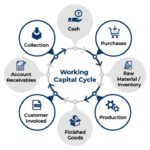
🧠 First: What are “Current Assets”?
Think of a business like a small shop.
Current assets are things the shop uses every day:
-
Cash 💵
-
Inventory (products to sell) 📦
-
Money customers owe (credit sales) 🧾
💡 Now: What is “Financing”?
It means: Where does the money come from to buy these things?
A business can use:
-
Short-term money (pay back soon)
-
Long-term money (pay back slowly)
💡 Now: What is “Working Capital”?
⚖️ The 3 Main Policies (The Real Topic)
1. 🟢 Conservative Policy (Safe but Expensive)


👉 Imagine your shop uses long-term loans for almost everything, even daily items.
-
Uses: Mostly long-term financing
-
Risk: ✅ Very LOW
-
Profit: ❌ Lower (because long-term money is costly)
📌 Simple idea:
“I want to play safe, even if I earn less.”
2. 🔴 Aggressive Policy (Risky but Profitable)


👉 Your shop uses short-term loans for everything, even long-term needs.
-
Uses: Mostly short-term financing
-
Risk: ❌ Very HIGH
-
Profit: ✅ Higher (short-term money is cheaper)
📌 Simple idea:
“I want to earn more, even if it’s risky.”
⚠️ Problem:
If money is suddenly needed → you might run out of cash 😬
3. 🟡 Moderate (Matching) Policy (Balanced Approach)


👉 Your shop matches the timing:
-
Short-term needs → short-term loans
-
Long-term needs → long-term loans
-
Risk: ⚖️ Medium
-
Profit: ⚖️ Balanced
📌 Simple idea:
“I’ll match things properly to stay balanced.”
🎯 Quick Comparison Table
| Policy | Risk Level | Profit | Strategy |
|---|---|---|---|
| Conservative | Low | Low | Play safe |
| Aggressive | High | High | Take risk |
| Moderate | Medium | Medium | Balance |
🧠 Super Simple Analogy
Think of it like food shopping:
- Conservative → Buy everything in bulk (safe but expensive)
- Aggressive → Buy daily with borrowed money (cheap but risky)
- Moderate → Buy weekly + monthly properly (balanced)